
Short Answer
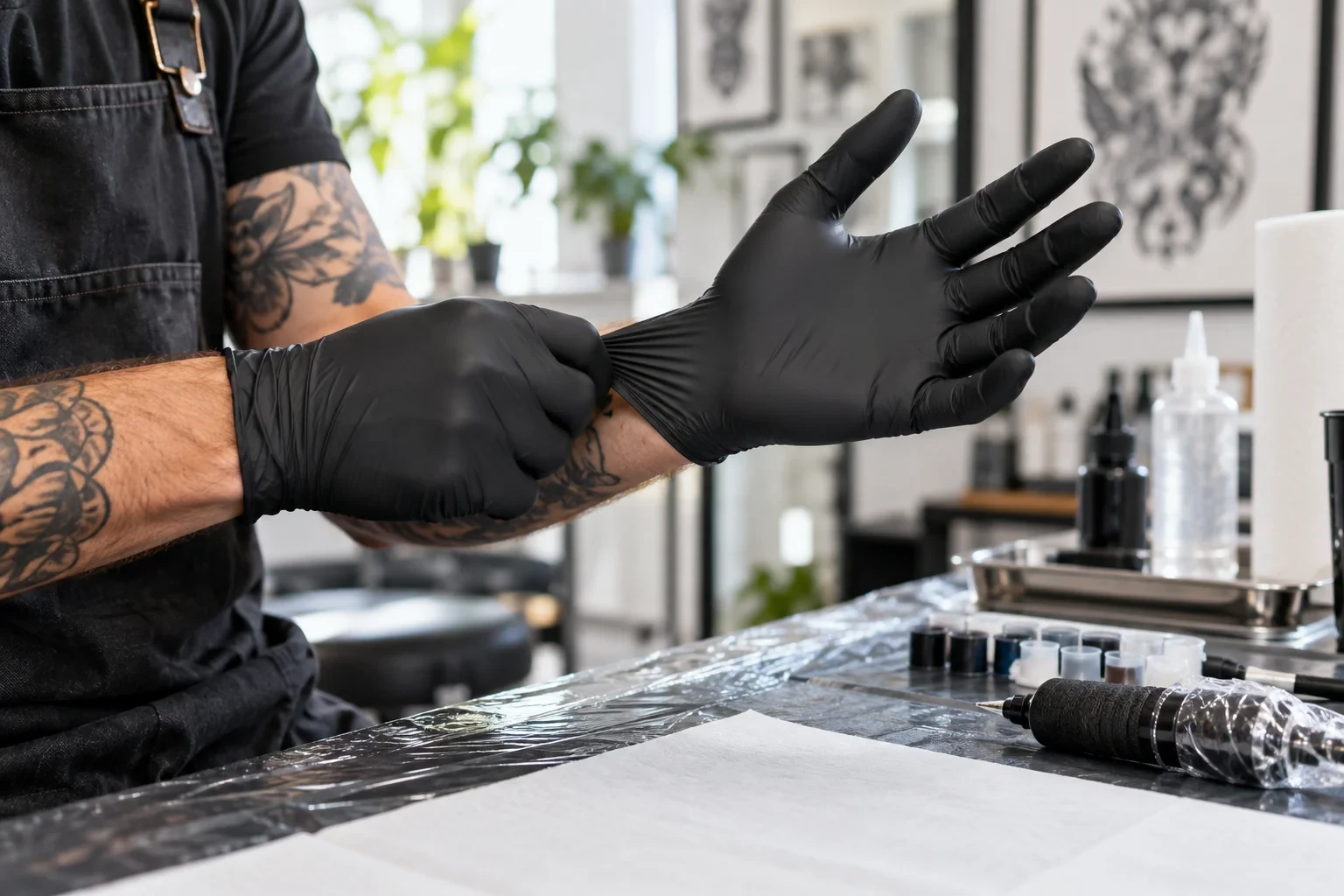
Black nitrile gloves are made without natural-rubber latex, which is relevant in settings where artists or clients have natural rubber latex sensitivities. They are available in examination and industrial classifications. For tattoo and body art procedures in California, Health and Safety Code §119308 requires clean, previously unused, disposable examination gloves on both hands immediately before the procedure. Review the exact product's documented classification and intended use before ordering.
This guide covers what to evaluate — fit, thickness, texture, classification, latex considerations, glove changes, and task separation — without recommending a specific product or mil range.
Why Black Nitrile Is Common in Tattoo Studios
Nitrile is a synthetic rubber made without natural-rubber latex. That characteristic is relevant in studio settings where artists or clients may have natural rubber latex sensitivities. Some rubber accelerators used in latex and nitrile gloves can cause allergic contact dermatitis in sensitized individuals. Being made without natural-rubber latex does not rule out other glove-related skin reactions.
Black is a color preference common in tattoo and body art settings. It is not a performance specification. Gloves of different colors may be made from different formulations with different properties; color alone does not determine thickness, classification, or suitability for a procedure.
Nitrile's general profile is a starting point for selection, not a conclusion. Whether a specific nitrile glove is appropriate for a specific procedure in your studio depends on the product's documented classification and intended use, your studio's procedures, and applicable regulatory requirements.
For a comparison of nitrile, vinyl, and latex material characteristics, see Nitrile vs. Vinyl vs. Latex Gloves.
Fit and Tactile Feedback for Detailed Work
Tattoo and body art work involves fine motor tasks: holding a machine, manipulating needles, applying stencils, and working in close contact with skin for extended periods. Fit affects dexterity, hand fatigue, and tactile sensitivity — all of which matter for detailed, precise work.
A glove that is too small restricts movement and increases hand fatigue. A glove that is too large bunches at the fingers, reduces tactile feedback, and can interfere with control. A snug fit without restriction is the general goal, but fit is individual — the right size for one artist may not be right for another.
Studios employ artists with a range of hand sizes. Planning a size mix based on actual fit requirements across your team helps keep appropriately fitting sizes available. Extended sessions increase the importance of fit and comfort — a glove that feels acceptable for a short task may cause fatigue during a multi-hour procedure.
For help planning a size mix across your studio, see the Disposable Glove Size Guide.
Thickness Trade-Offs
Thickness is measured in mils (thousandths of an inch). A thicker glove puts more material between the hand and the work environment. How that affects tactile sensitivity and physical durability depends not only on thickness but also on the glove's construction, formulation, and fit — two gloves at the same nominal mil rating can feel and perform differently.
For detailed skin-contact work where feeling the machine, needle, and surface matters, some artists prefer thinner gloves for the tactile feedback they allow. Others find that a slightly thicker glove holds up better over a long session without meaningfully reducing control. Neither preference is universal — the right trade-off depends on the specific task, the artist's technique, and the documented properties of the product.
Thickness does not establish chemical compatibility with inks, soaps, disinfectants, or other studio substances. A thicker glove made from a formulation that is not compatible with a particular substance will still degrade or allow permeation. Thickness may affect how long permeation takes in some cases, but it is not a substitute for reviewing the manufacturer's compatibility data for the specific glove and substance.
There is no universal mil recommendation for tattoo work. Evaluate the specific product's documented properties alongside the task requirements rather than selecting by thickness range alone.
For a detailed explanation of mil measurements and how thickness affects physical characteristics, see the Disposable Glove Thickness Guide.
Texture and Grip
Disposable nitrile gloves are available with fingertip texture, micro-texture, full-hand texture, and other surface finishes. Texture affects grip on tools, machines, and surfaces. The specific grip characteristics of a glove depend on the product — do not assume all nitrile gloves with the same texture label perform identically.
Wet conditions — ink, blood, soap, or other fluids present during a procedure — affect grip differently than dry conditions. Texture can help maintain grip in wet conditions, but the degree of improvement depends on the specific product and the conditions of use. Texture does not establish chemical compatibility.
Review the texture description on the specific product page rather than relying on general category claims. Fingertip-textured gloves concentrate surface finish at the fingertips; fully textured gloves extend it across the palm and fingers. Which is more useful depends on the specific tasks performed.
For a comparison of surface finishes and what each affects, see the Disposable Glove Texture Guide.
Examination vs. Industrial Classification
Disposable nitrile gloves are sold under two primary classifications: examination grade and industrial grade. Examination-grade gloves are regulated by the FDA as medical devices and must meet specific requirements for use in medical examination and related procedures. Industrial-grade gloves are not subject to FDA medical device requirements.
Medical examination gloves are regulated by the FDA and require a 510(k) premarket notification. A marketing label alone does not verify regulatory clearance or suitability for your procedure. Review the exact product's manufacturer documentation and applicable FDA clearance information.
For tattoo and body art procedures in California, Health and Safety Code §119308 specifically requires examination gloves. Industrial-grade gloves are not an interchangeable option for those procedures under California law. Studios operating under other state or local requirements should consult the applicable regulations directly.
For a full explanation of classification differences, see Exam Grade vs. Industrial Gloves.
California Requirements: §119308 and What It Requires
California Health and Safety Code §119308 establishes specific glove requirements for body art procedures performed in California. The following is a paraphrase of the statutory requirements — studios should read the current statute directly and consult applicable guidance from the California Department of Public Health.
Under §119308, a body art practitioner must put on clean, previously unused, disposable examination gloves on both hands immediately before performing a body art procedure. Both gloves must be replaced — with hand hygiene performed before putting on new gloves — when a glove is torn or punctured, or after contact with objects or surfaces outside the client's prepared skin or the procedure materials being used.
If gloves are removed during a procedure for any reason, hand hygiene is required before putting on new examination gloves to resume the procedure.
These are California-specific statutory requirements. They apply to body art procedures as defined under California law. Industrial-grade gloves do not satisfy the examination-glove requirement under §119308. Studios in other states should consult their applicable state and local regulations.
Glove Changes and Hand Hygiene
California §119308 establishes specific glove-change and hand-hygiene requirements for body art procedures, as described in the section above. Beyond the statutory requirements, general infection-control guidance from the CDC recommends that gloves be changed between patients and that hand hygiene be performed after glove removal.
Disposable gloves are single-use. They should not be washed and reused. Glove integrity can be compromised by punctures, tears, or extended use. A glove that appears intact may still have microscopic defects — gloves are a barrier measure, not an absolute barrier.
Hand hygiene after glove removal is important because gloves can develop undetected defects during use and because contamination can occur during removal. Follow your studio's procedures and applicable regulatory requirements for both glove changes and hand hygiene.
Latex Sensitivity: Artist and Client Considerations
Natural rubber latex allergy is a recognized occupational and patient safety concern. Nitrile gloves are made without natural-rubber latex, which distinguishes them from latex gloves in settings where latex sensitivity is a consideration.
Some rubber accelerators used in latex and nitrile gloves can cause allergic contact dermatitis in sensitized individuals. Being made without natural-rubber latex does not rule out other glove-related skin reactions. This article does not make allergy claims about any specific product. Studios should follow their own procedures for client health screening and allergy disclosure, and consult appropriate health professionals when questions arise.
If a client discloses a latex allergy or sensitivity, confirm the specific glove product being used is made without natural-rubber latex and review the product documentation. Do not assume that all black or all nitrile gloves share the same formulation.
For a broader explanation of nitrile and latex-free claims, see Are Nitrile Gloves Latex-Free?
Tattooing and Cleaning Are Different Tasks
Gloves used for tattooing or body art procedures are not automatically appropriate for surface disinfection, ink mixing, or aftercare product handling. These tasks involve different substances, exposure conditions, and durations.
Surface disinfectants, isopropyl alcohol, green soap, and other studio chemicals each have their own exposure profile. A glove appropriate for procedure use may not be appropriate for prolonged contact with a disinfectant. Review the applicable Safety Data Sheet and manufacturer compatibility data for each substance and task separately.
Plan glove selection for each task category in the studio rather than assuming one product covers all uses.
Practical Purchasing Checklist
Before ordering, confirm the product's classification — examination or industrial — and review its documented intended use. For California studios, examination classification is required under §119308.
Plan size mix based on actual artist fit requirements. Base quantities on your team's actual size needs rather than assuming equal demand for every size.
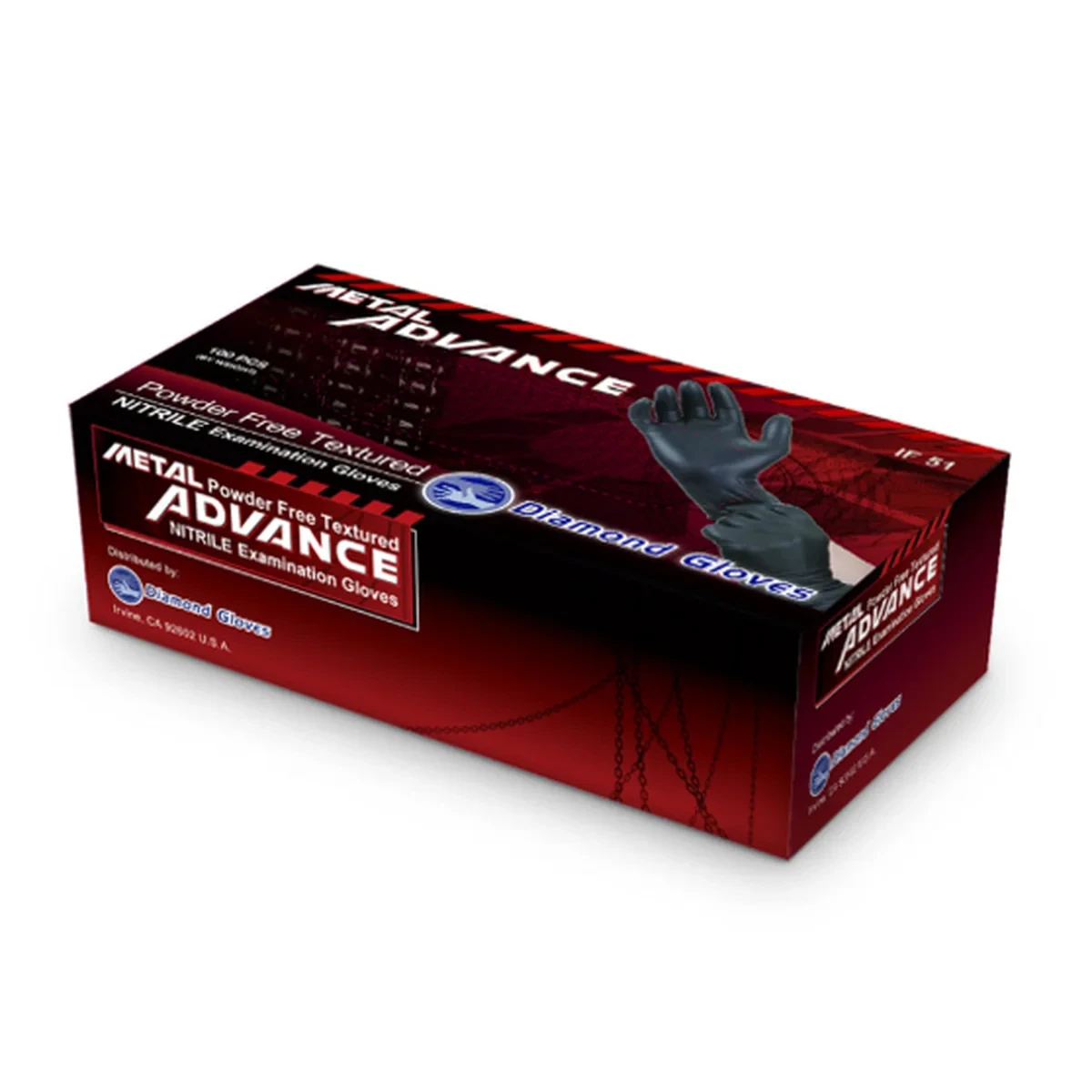
Review case quantities and box counts before ordering. AEKONAMI sells by the case with a one-case minimum. Box counts and case quantities vary by product — confirm the specific product's packaging details before placing an order.
Keep a record of the product name, model, and classification for each approved product in the studio. This supports consistent reordering and documentation of the products used.
Establish a reorder schedule based on actual session volume and consumption. Running out mid-session is avoidable with a consistent replenishment process.
Frequently Asked Questions
Does California require examination gloves for tattoo procedures?
Yes. California Health and Safety Code §119308 requires a body art practitioner to put on clean, previously unused, disposable examination gloves on both hands immediately before performing a body art procedure. Industrial-grade gloves do not satisfy this requirement. Both gloves must be replaced — with hand hygiene — when torn or punctured, or after contact with objects or surfaces outside the client's prepared skin or procedure materials. If gloves are removed during the procedure, hand hygiene is required before putting on new examination gloves.
Does a thicker nitrile glove provide better protection during tattooing?
Thickness affects physical durability and tactile sensitivity, but how it affects performance depends on the glove's construction, formulation, and fit — not thickness alone. Thickness does not establish chemical compatibility with inks, soaps, or disinfectants. There is no universal mil recommendation for tattoo work. Evaluate the specific product's documented properties alongside the task requirements.
Are black nitrile gloves safer than blue or clear nitrile for tattoo work?
Color is an appearance choice, not a performance specification. Gloves of different colors may be made from different formulations with different properties. Classification, documented intended use, fit, and the specific product's characteristics determine suitability — not color.
Can I use the same gloves for tattooing and cleaning my station?
Not necessarily. Gloves used for procedures may not be appropriate for surface disinfection or chemical handling tasks. Different substances and exposure conditions may require different glove specifications. Review the applicable Safety Data Sheet and manufacturer compatibility data for each task separately.
Are nitrile gloves safe for clients with latex allergies?
Nitrile gloves are made without natural-rubber latex, which distinguishes them from latex gloves. However, some rubber accelerators used in latex and nitrile gloves can cause allergic contact dermatitis in sensitized individuals — being made without natural-rubber latex does not rule out other glove-related skin reactions. If a client discloses a latex allergy, confirm the specific product is made without natural-rubber latex and review the product documentation. Consult appropriate health professionals for clinical allergy guidance.
Sources