
AUTO DETAIL SHOPS
Disposable Gloves for Auto Detail Shops and Car Detailing Teams
AEKONAMI supplies disposable gloves by the case for auto detail shops, mobile detailing teams, and vehicle-preparation businesses. From interior cleaning and exterior detailing to equipment setup and cleanup between vehicles, the right glove depends on the products being handled, the task, and the glove manufacturer's documented intended use. Compare available materials, sizes, and case quantities, then contact us for current availability or volume pricing.
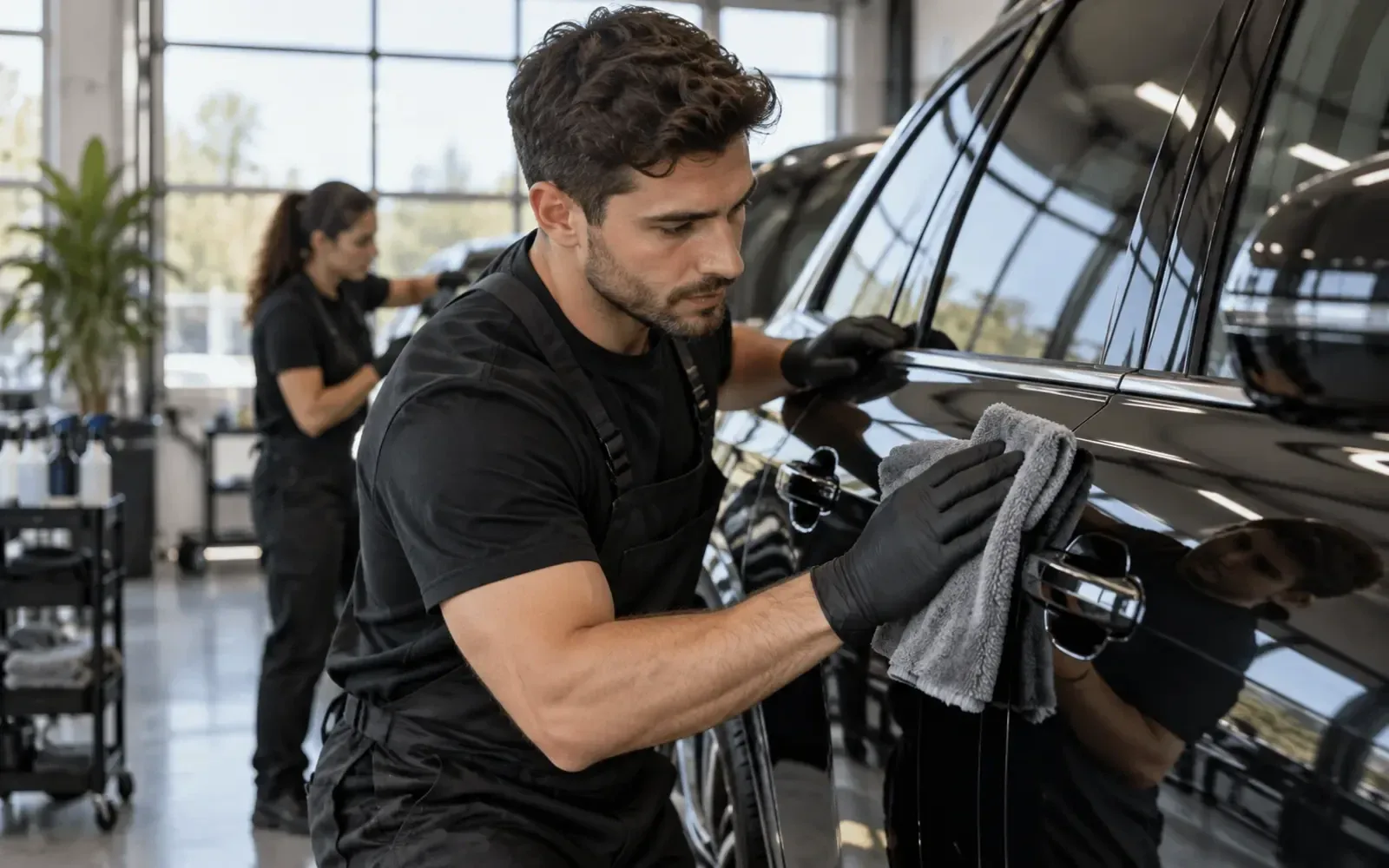
DETAILING TASKS
Where Disposable Gloves Fit in Auto Detailing Work
Auto detail shops and mobile detailing teams perform a range of tasks during a single vehicle appointment. Glove requirements can differ by task, the products handled, and your workplace procedures. Review each area before selecting a glove.
Interior cleaning
Interior cleaning may involve fabric cleaners, leather conditioners, plastic dressings, and surface disinfectants. Verify that the glove is appropriate for each product handled and the specific task before use.
Exterior washing and finishing
Exterior work may include wash soaps, clay bar products, polishes, waxes, and paint sealants. Product formulations vary — review the applicable safety data sheet and glove manufacturer's documentation for each product.
Handling degreasers and solvents
Engine bay cleaning, wheel degreasing, and adhesive removal may involve stronger chemical formulations. Nitrile material does not automatically establish compatibility with any specific degreaser or solvent. Consult the safety data sheet and glove manufacturer's compatibility information.
Equipment setup and cleanup between vehicles
Disposable gloves may support equipment handling, tool prep, and cleanup between appointments. They do not replace task-specific protective equipment required by your workplace procedures.
CHOOSE BY TASK AND PRODUCT
Select Gloves Based on the Task, the Products, and the Documentation
Glove material, color, and thickness alone do not determine whether a glove is appropriate for a given detailing task. Start with the specific task, the products involved, and the manufacturer's documented intended use.
What task is being performed?
Identify whether the work involves interior cleaning, exterior washing, product application, degreasing, or cleanup. Each task may involve different products and exposures with different glove requirements.
What products are being handled?
Interior cleaners, wash soaps, polishes, waxes, dressings, degreasers, and solvents each introduce different considerations. Review the applicable safety data sheet and glove manufacturer's documentation for each product and task combination.
What does the glove manufacturer document?
Confirm the exact glove's material, classification, intended use, thickness, available sizes, and manufacturer information before selecting a product. Do not assume compatibility based on material or color alone.
What do your workplace procedures require?
Review your shop's workplace procedures, applicable safety data sheets, and any regulatory requirements before finalizing glove selection for each task or workstation.
IMPORTANT LIMITATIONS
Disposable Gloves Are Not Universal Protection for Every Detailing Product
Auto detail shops use cleaners, degreasers, solvents, polishes, waxes, coatings, and other formulations. Nitrile material and greater thickness do not automatically establish compatibility with any particular substance. Performance can vary by product, formulation, concentration, contact type, duration, temperature, and use conditions.
For substance-related tasks, review the applicable safety data sheet, workplace procedures, anticipated exposure, and manufacturer compatibility information for the exact glove. Ordinary disposable gloves are not cut-resistant, puncture-resistant, or solvent-proof. They are not a substitute for task-specific protective equipment required by your workplace procedures.
Degreasers and solvents
Do not assume nitrile is compatible with any specific degreaser, solvent, or adhesive remover. Review the exact product's safety data sheet and the glove manufacturer's compatibility information before use.
Coatings and ceramic products
Paint protection coatings, ceramic products, and similar formulations may require specific glove types. Verify the exact product's safety data sheet and glove recommendations before selecting a glove for these tasks.
Cut and puncture hazards
Ordinary disposable gloves do not provide cut or puncture resistance. Tasks involving sharp tools, trim removal, or similar mechanical hazards require appropriate protective equipment beyond disposable gloves.
COMPARE MATERIALS
Nitrile, Vinyl, and Latex: What Detail Shop Buyers Commonly Compare
Detail shop buyers most often compare nitrile, vinyl, and latex options. The right choice depends on the task, the products handled, fit requirements, and each glove's documented intended use — not on material alone.
| Material | Notes for Detail Shop Buyers |
|---|---|
| Nitrile | Available in examination and industrial classifications across multiple thicknesses. Commonly considered for interior cleaning, exterior washing, and product application. Confirm compatibility with specific products and tasks before use. |
| Vinyl | Latex-free option available in examination and food-service classifications. Review the exact product's intended use and compatibility with the products and tasks in your shop. |
| Latex | Natural rubber latex gloves offer fit and tactile sensitivity for some detailing tasks. Not appropriate where latex sensitivity is a concern for staff. Confirm the exact product's intended use and compatibility. |
Material alone does not establish compatibility with any specific product or task. Review each glove's documented intended use and applicable safety data sheets.
FIT AND CASE RESTOCKING
Fit, Sizing, and Planning Case Quantities for Your Shop
Fit and dexterity
Fit matters when technicians move between applicators, towels, equipment, and small vehicle components. Stock sizes your team can wear comfortably, and consider where frequent glove changes are required under your procedures.
Thickness and tactile sensitivity
Thickness affects feel and durability. It does not by itself establish chemical compatibility, classification, or suitability for a specific task or product. Review the exact product's documentation.
Planning case quantities
A case-ordering plan should reflect the number of technicians, the services performed, and real glove usage — not an assumption that one thickness or material is appropriate for every job.
Size mix across your team
Plan case quantities based on actual fit requirements rather than ordering equal quantities of every size. Use manufacturer sizing charts and have technicians verify fit before committing to a full case.
FREQUENTLY ASKED QUESTIONS
Common Questions from Auto Detail Shop Buyers
Buying Gloves for a Detail Shop or Mobile Detailing Team
Detailing technicians move between very different tasks on the same vehicle: wiping interior surfaces, applying cleaners or dressings, working around wheels and trim, and preparing surfaces for the next step. A well-fitting glove can make towels, applicators, sprayers, and small tools easier to handle without loose fingertips or a fit that feels too tight. Keep suitable sizes near each work area so technicians can change gloves when the task or workplace procedure calls for it, instead of trying to use one pair through the entire appointment.
The products used in a detail shop matter just as much as fit. An interior cleaner, wheel product, degreaser, coating, and solvent-based product may have different handling requirements. A thicker glove is not automatically compatible with all of them, and nitrile is not a blanket answer for every chemical. Review each product's safety data sheet and the glove manufacturer's documented compatibility and intended use, then identify which glove options your team has approved for particular tasks. The goal is a practical, documented selection—not a claim that one disposable glove protects against every detailing product.
For a fixed-location shop, stock gloves where technicians actually use them: interior-cleaning stations, wash or prep bays, and cleanup areas. Mobile detailers may need a compact mix of approved glove options and sizes in each vehicle so a missing size does not interrupt an appointment. Track which sizes your team uses most often, then plan case quantities around real usage, technician count, and service mix. AEKONAMI supplies disposable gloves by the case and can discuss available materials, sizes, and volume pricing for independent auto detail shops, mobile detailing teams, and multi-location vehicle-preparation businesses.
Ready to Order Gloves for Your Detail Shop or Mobile Team?
Compare available nitrile, vinyl, and latex options by the case, or contact us to discuss volume pricing for your operation.