
Buyer's Guide
Best Nitrile Gloves for Car Detailing: How to Choose the Right Pair
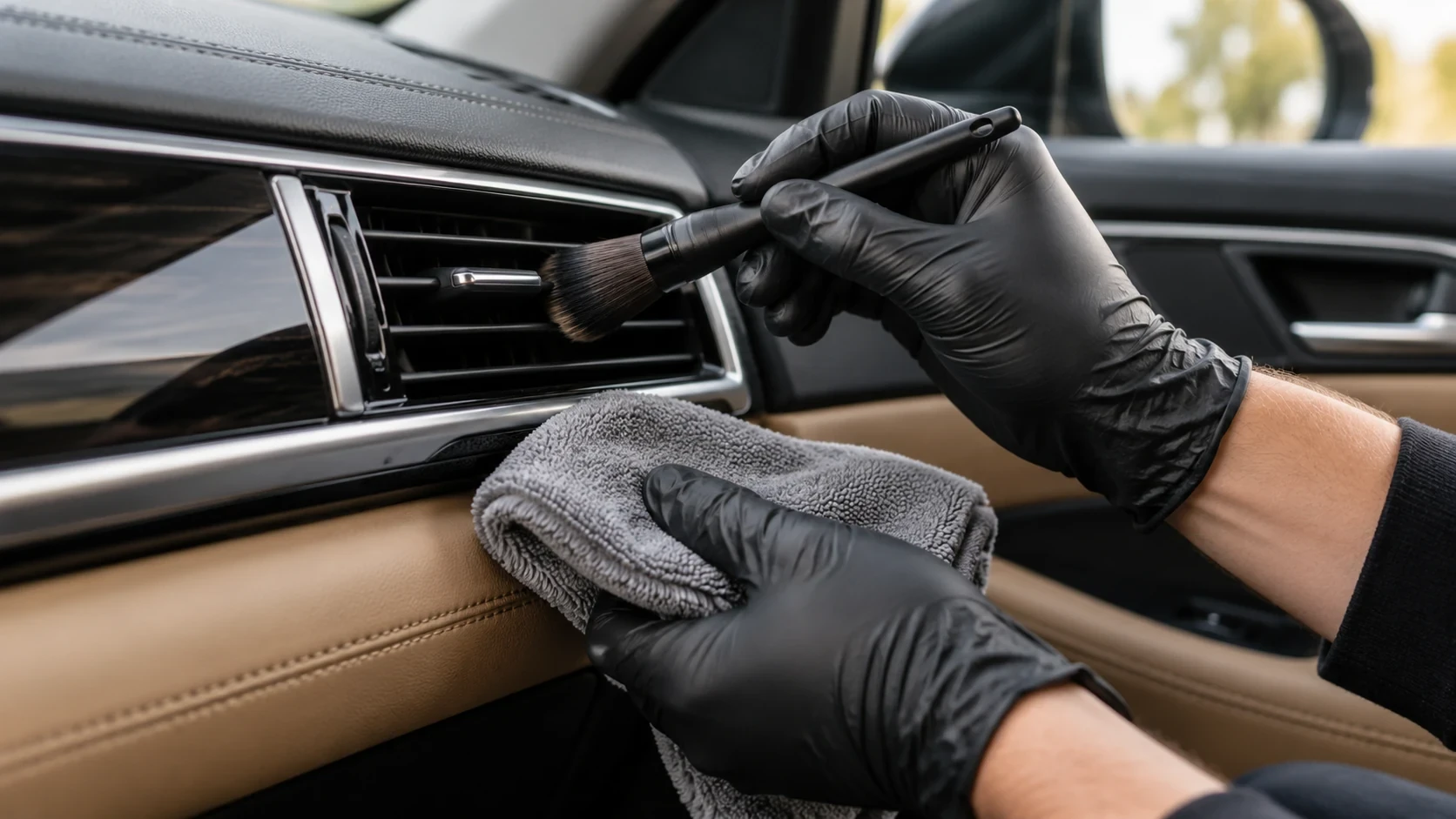
The best nitrile gloves for car detailing match the products you use and let you work comfortably with towels, brushes, applicators and small interior controls. Black color or a higher thickness number alone cannot tell you which pair will suit your workflow.
Start with the detailing task and product requirements. Then compare fit, texture, thickness and cuff coverage. This guide explains those decisions and introduces two AEKONAMI options to compare.
Quick Answer: What Should Detailers Look For?
For tasks where disposable nitrile is appropriate, choose a documented product that fits securely without restricting finger movement. Look for practical control of your usual tools, suitable cuff coverage and sizes your team can consistently reorder.
Check compatibility with the exact detailing products involved before selecting a glove. Neither nitrile material, examination classification nor a particular mil rating establishes protection against every cleaner, degreaser or coating.
Interior Detailing: Fit Matters Around Small Controls
Interior work often means folding a microfiber towel around trim, holding a small brush or working near narrow seams. Loose material beyond the fingertips can make those movements awkward. An overly tight glove can restrict the thumb and fingers.
Evaluate a fresh pair with clean tools in a nonhazardous setup. Pick up a brush, fold a towel and hold an applicator. Check whether the glove bunches, slips or needs repeated adjustment.
Use the disposable glove size guide as a starting point, then assess the actual model. A medium in one product may not fit like a medium in another.
Exterior Detailing: Separate the Tasks
Washing, wheel cleaning, trim treatment and coating application can involve different substances and contact conditions. Choose equipment for each activity rather than assuming one pair covers the whole vehicle.
| Detailing activity | What to evaluate |
|---|---|
| Interior brushing and wiping | Fingertip fit, comfortable movement and compatibility with the cleaner |
| Washing and wet handling | Required wet-work protection, cuff coverage and control of tools |
| Wheel and tire cleaning | Exact cleaner, dilution, exposure conditions and glove compatibility |
| Polish or coating application | Product instructions, required glove type and applicator handling |
| Moving to clean finishing work | Whether gloves need replacing to avoid transferring residue |
Keep clean replacement gloves accessible. Plan the transition from dirty work to finishing so residue is not carried onto clean towels, tools or surfaces.
AEKONAMI Options to Compare: IF51 and IF63
IF51 and IF63 provide two black nitrile examination-glove options with different listed fingertip thicknesses. Both are powder-free and finger micro-textured.
Use the table to compare documented characteristics, then check fit and the requirements of your detailing products. This is a specification comparison, not a tested performance ranking.
| Specification | IF51 | IF63 |
|---|---|---|
| Material and color | Black nitrile | Black nitrile |
| Classification | Examination | Examination |
| Powder status | Powder-free | Powder-free |
| Listed fingertip thickness | 5.0–6.0 mil | 6.5–7.5 mil |
| Surface | Finger micro textured | Finger micro textured |
| Cuff style | Beaded cuff | Beaded cuff |
| Product information | View IF51 | View IF63 |
Compare IF51 if you want to evaluate the lower listed thickness of these two models. Compare IF63 if you want to evaluate the higher listed thickness. Neither choice should be made on thickness alone: fit, flexibility and documented suitability still matter.
A higher fingertip measurement does not prove better chemical protection, and examination classification does not establish compatibility with detailing chemicals.
How Thick Should Car-Detailing Gloves Be?
There is no universal thickness for every detailing activity. Thickness can influence feel, but formulation, fit, construction and working conditions also affect the finished glove.
Compare the same measurement location across products. A fingertip thickness is not necessarily the thickness at the palm or cuff. Our disposable glove thickness guide explains the terminology.
When evaluating options, check whether you can comfortably grip a brush, fold a towel and handle an applicator. Do not assume that a thicker glove will feel the same as a thinner one from the same brand.
If gloves keep ripping, review sizing, donning, storage and contact with sharp surfaces before simply ordering a higher mil rating. See our guide to why disposable gloves tear.
Texture, Cuff Length and Color
Finger microtexture and diamond texture are different surface designs. Compare how the actual glove handles your clean tools rather than assuming a more pronounced texture guarantees control on wet or slippery surfaces.
Longer cuffs provide additional coverage. That coverage can be worth considering alongside sleeves and other required equipment, but it does not establish suitability for chemical immersion.
Black or blue can be a business preference or part of task organization. Color alone does not establish strength or cleanliness. Hidden stains are not a reason to continue using a contaminated pair.
For a broader comparison of texture and cuff options, read the heavy-duty nitrile gloves buying guide.
Check the Detailing Product Before Selecting Protection
Identify the exact cleaner, coating or treatment and its intended dilution. Review the product instructions and safety data sheet, especially the exposure-control and personal-protection information, alongside manufacturer guidance for the exact glove.
Check whether contact will be incidental, repeated or prolonged. A recommendation for brief splashes should not be interpreted as approval for sustained contact.
If suitability is unclear, ask the detailing-product and glove suppliers for documentation or choose a documented alternative. Do not deliberately expose your hands to test compatibility.
The UK Health and Safety Executive's motor-vehicle glove-selection guidance explains why substance-specific information matters. This is a technical reference, not a statement of U.S. legal requirements.
Our nitrile glove chemical-resistance guide provides additional purchasing context. Gloves are one part of the protective measures required for the task.
Plan Glove Changes and Case Orders
Replace damaged gloves and follow product instructions and workplace procedures for contamination and task changes. Disposable gloves should not be repaired or washed for reuse.
For a detailing team, record the approved model and size for each relevant activity. Track consumption by size so employees do not have to use an unsuitable fit when a common size runs out.
Before ordering, confirm:
- Product documentation for the intended work.
- Staff sizes and actual fit.
- Thickness measurement, texture and cuff design.
- Gloves per box and total gloves per case.
- Storage instructions and availability for repeat orders.
A substitute with the same color and mil rating is not automatically equivalent. Recheck documentation and fit when changing models.
Browse black nitrile gloves and blue nitrile gloves, or request wholesale pricing for larger or recurring purchases.
Frequently Asked Questions
- What thickness nitrile gloves are best for car detailing?
- There is no single best thickness for every task. Confirm suitability for the products involved, then compare fit, finger movement and documented specifications. Thickness alone does not establish chemical protection.
- Are black nitrile gloves better than blue gloves for detailing?
- Not because of color alone. Compare the exact products' fit, texture, classification and compatibility information. Color can be a preference or part of task organization.
- Can nitrile gloves be used with every wheel cleaner or ceramic coating?
- No universal compatibility should be assumed. Check the exact product, dilution and exposure conditions against its instructions, safety data sheet and the glove manufacturer's information.
- What is the difference between IF51 and IF63?
- Both are powder-free black nitrile examination gloves with finger-micro-textured surfaces and beaded cuffs. IF51 lists 5.0–6.0 mil fingertip thickness; IF63 lists 6.5–7.5 mil. Compare current product documentation and actual fit before selecting.
Compare Gloves for Your Detailing Business
Review IF51 and IF63 specifications, confirm suitability for the products you use, and choose appropriate sizes and case quantities for your team.