
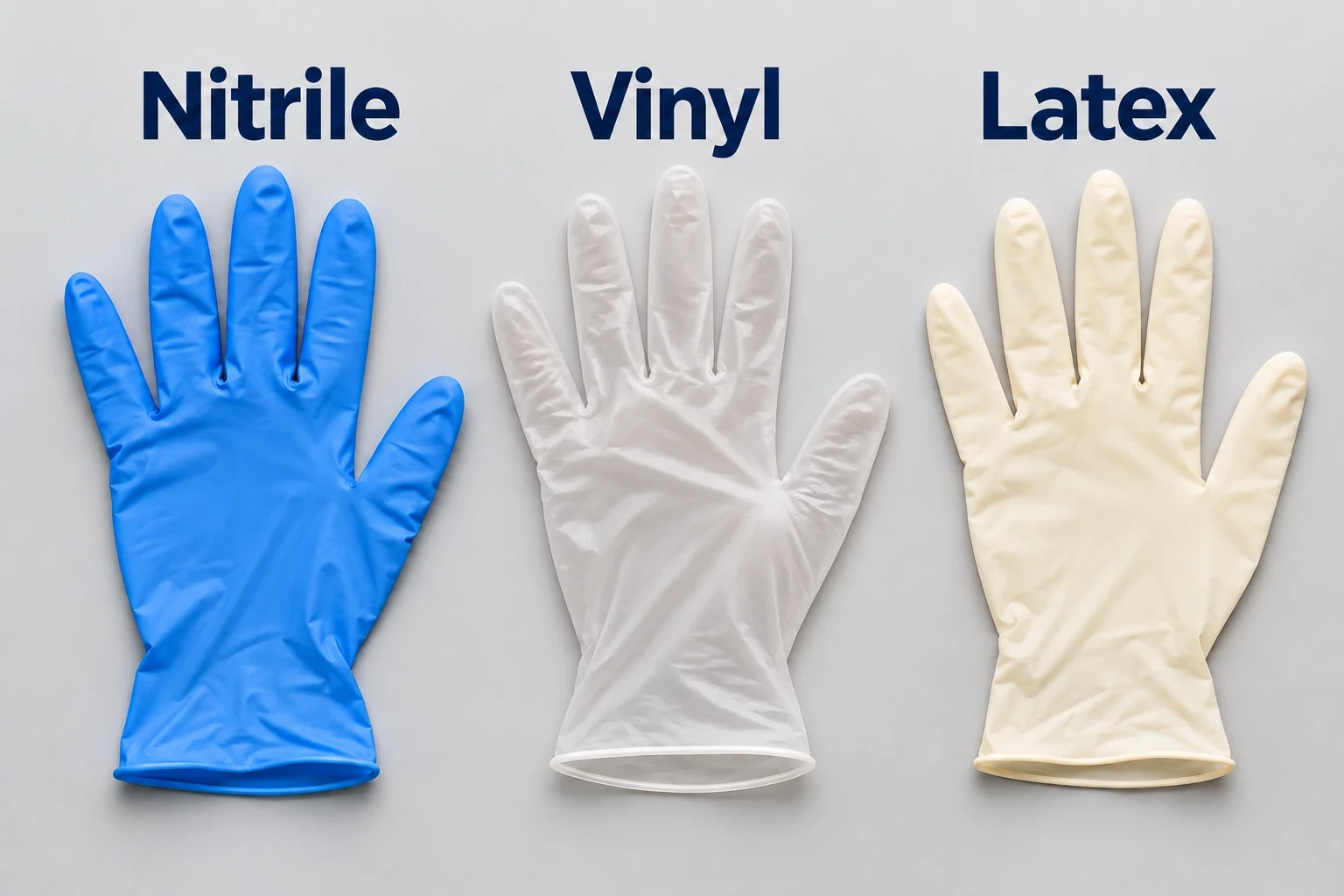
Nitrile Gloves
Nitrile is a synthetic rubber material that has become the most widely used disposable glove material across many industries. It does not contain natural rubber latex, which makes it a practical option for workplaces where latex allergies are a concern.
Nitrile gloves are generally known for their durability and resistance to punctures and tears compared to vinyl. They tend to conform closely to the hand over time, which many users find comfortable for extended wear. Nitrile is available in a wide range of thicknesses — from lightweight exam-grade styles to heavier industrial options — and is commonly selected for healthcare, automotive, food service, and industrial applications. Suitability for any specific application depends on the individual product and its documented specifications. Browse nitrile gloves.
Common considerations for nitrile
- Latex-free — suitable for latex-sensitive environments
- Often selected for durability — puncture and tear resistance varies by product, thickness, and formulation
- Available in exam-grade and industrial-grade options
- Wider thickness range — from 3 mil to 10+ mil
- Typically higher cost than vinyl, though pricing varies by product and quantity
Always review individual product specifications to confirm suitability for your specific application, particularly for regulated uses.
Vinyl Gloves
Vinyl gloves are made from polyvinyl chloride (PVC) and are often selected when cost is an important purchasing consideration, particularly for frequent glove changes and shorter-duration tasks. They are latex-free and are commonly used for light-duty work where high durability is not the primary requirement.
Vinyl gloves tend to have a looser fit than nitrile and are less elastic, which can affect dexterity for detailed work. They are a popular choice in food service and general-purpose applications where gloves are changed frequently and cost per glove is an important factor. Suitability for food contact or other regulated uses depends on the specific product — always review individual product specifications. Browse vinyl gloves.
Common considerations for vinyl
- Latex-free
- Often selected when cost per glove is a primary consideration — actual pricing varies by product and quantity
- Looser fit — less form-fitting than nitrile or latex
- Less elastic — may not conform as closely to the hand
- Commonly used for light-duty, short-duration tasks
Review individual product specifications to confirm suitability for your application, particularly for food contact or regulated uses.
Latex Gloves
Latex gloves are made from natural rubber and have historically been used in healthcare and laboratory settings. They are known for their close fit, elasticity, and tactile sensitivity, which many users find beneficial for detailed or precise work. Suitability for any specific application — including regulated uses — depends on the individual product and its documented specifications.
The primary consideration with latex is that natural rubber latex can cause allergic reactions in some individuals. For this reason, many workplaces have moved toward nitrile alternatives. However, latex remains a preferred material in settings where its fit and sensitivity characteristics are valued and latex allergies are not a concern. Browse latex gloves.
Common considerations for latex
- Contains natural rubber latex — not suitable where latex allergies or sensitivities are a concern
- Close, elastic fit with good tactile sensitivity
- Available in powdered and powder-free options
- Used in a range of settings — suitability depends on the specific product and its documented specifications
Quick Comparison
| Feature | Nitrile | Vinyl | Latex |
|---|---|---|---|
| Material | Synthetic rubber | PVC (synthetic) | Natural rubber |
| Latex-free | Yes | Yes | No |
| Fit | Close, conforms over time | Looser | Close, elastic |
| General durability characteristics | Often higher — varies by product | Often lower — varies by product | Moderate — varies by product |
| Typical cost | Moderate–higher | Lower | Moderate |
This table reflects general characteristics. Actual performance varies by product, manufacturer, and thickness. Always review individual product specifications before selecting gloves for a specific application.
How to Compare Materials for Your Business
When evaluating glove materials, consider the following:
- Task requirements — Does the task require high dexterity, extended wear, or resistance to specific substances? Review product specifications carefully.
- Latex sensitivity — If anyone in your workplace has a latex allergy or sensitivity, nitrile or vinyl are latex-free alternatives.
- Volume and cost — For high-volume, short-duration tasks, vinyl may offer a cost advantage. For tasks requiring more durability, nitrile is commonly preferred.
- Regulatory requirements — For regulated applications (healthcare, food service, laboratory), verify that the specific product meets the requirements for your use case. Do not assume a glove is suitable based on material alone.