
Glove Care & Comfort
Why Do My Hands Sweat in Nitrile Gloves? Causes and Tips
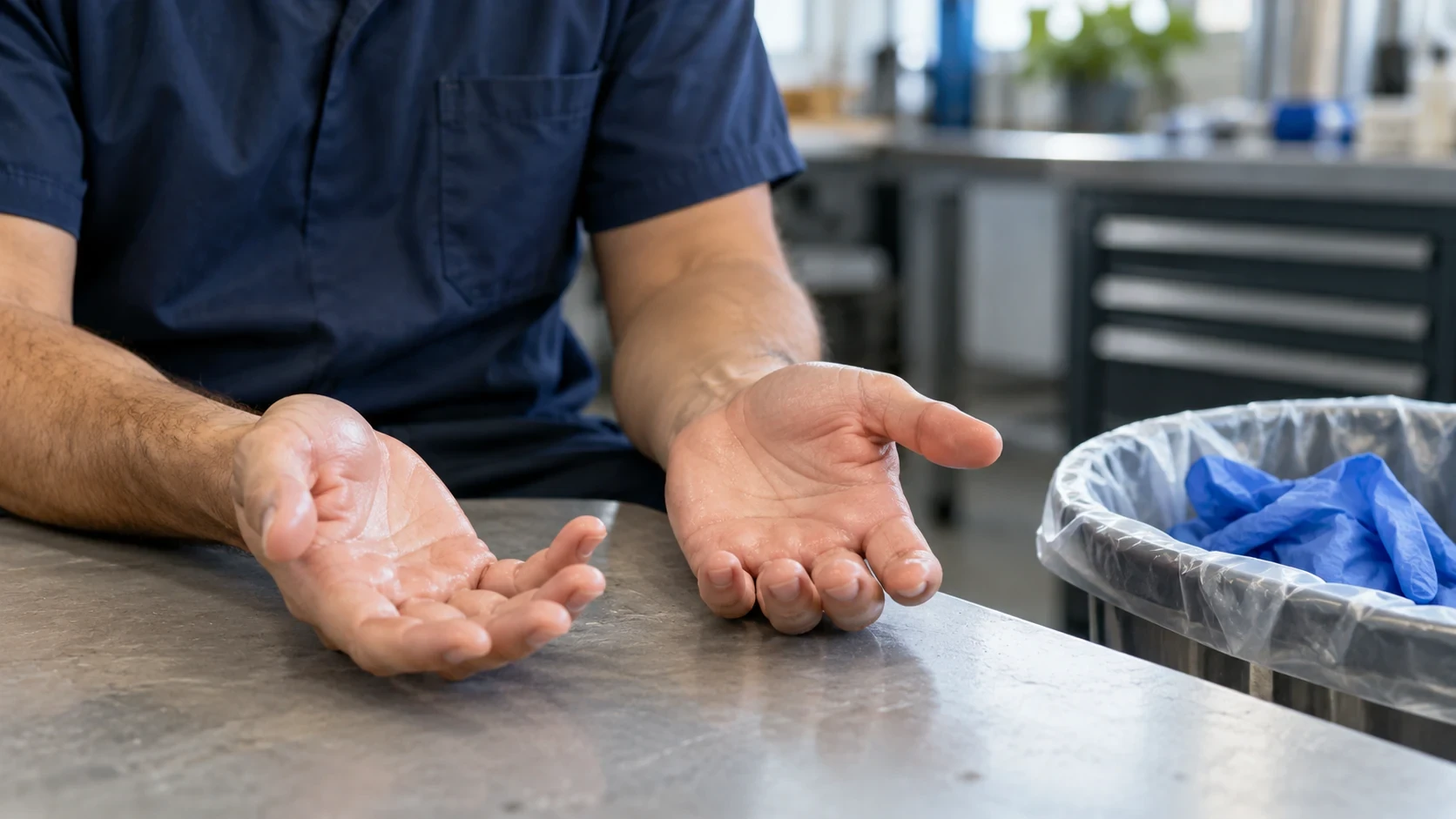
Damp palms, sticky fingertips and gloves that become difficult to put on can interrupt an otherwise straightforward task. If you wear nitrile gloves at work, managing the moisture inside them can make a difference to everyday comfort.
The starting point is understanding what the glove does: it forms a barrier around your hand. Sweat has less opportunity to evaporate than it does from uncovered skin. The practical goal is to manage moisture while keeping the protection and hygiene your work requires.
Quick Answer: Why Does It Happen?
Nitrile gloves enclose the skin, limiting evaporation and allowing moisture to build up inside. Warm conditions, active work and longer periods of wear can make that damp feeling more noticeable.
Start with fully dry hands, check the fit and arrange appropriate glove changes or breaks when the task permits. Do not cut holes in gloves or remove required protection during exposure.
Trapped Moisture Is Different From a Leaking Glove
Moisture inside a glove may come from your hands, but do not assume that every wet feeling is sweat. Liquid can also enter at the cuff, and a damaged glove may no longer provide the intended barrier.
If you suspect a tear, leak or exposure, follow your workplace procedure and replace the glove. Do not keep working simply because sweating seems like a possible explanation.
DermNet identifies sweating, occlusion, friction and repetitive washing among the factors associated with irritant dermatitis in nitrile-glove users. Dampness and skin irritation deserve attention, particularly when glove wear is frequent.
How to Manage Sweaty Hands in Nitrile Gloves
| What to check | Practical next step |
|---|---|
| Hands are damp before gloving | Complete the required hand hygiene and allow hands to dry fully before putting on a fresh pair. |
| The glove feels restrictive | Compare the fit against the manufacturer’s size guide rather than automatically choosing the next size up. |
| Moisture builds during extended wear | Plan safe opportunities to remove gloves, clean and dry hands, and use a fresh pair when protection is needed again. |
| The work area is hot | Discuss appropriate temperature control or task scheduling without changing required protective measures. |
| Skin becomes itchy, sore or cracked | Seek advice rather than assuming sweat is the only cause. |
| Liquid may have entered or the glove may be damaged | Stop and follow the applicable exposure and replacement procedure. |
There is no single change that suits every workplace. A tattoo procedure, patient-care task and chemical-cleaning job each have different requirements for when gloves can be removed or replaced.
Start With Dry Hands
Putting gloves over damp hands adds moisture before the task begins. After washing, dry your hands thoroughly. When using an alcohol-based hand rub, allow it to dry completely before gloving.
In healthcare settings, CDC advises hand hygiene before putting on gloves when the task requires them and after removal. A comfort routine should support those steps, not replace them.
Keep fresh gloves accessible so that damp hands do not become a reason to reuse a pair that should be discarded.
Check Fit Without Sacrificing Control
An uncomfortable fit can make prolonged glove wear harder to tolerate. A glove that restricts movement is worth reassessing, but a loose glove is not a ventilation solution.
Try a fresh pair in a clean setup and check:
- Whether the fingertips reach comfortably without excessive loose material.
- Whether you can open and close your hand without excessive restriction.
- Whether the palm and cuff remain comfortable during normal movement.
- Whether you can handle the tools or supplies used for the task.
Compare the specific manufacturer’s sizing information. Different glove models may feel different even when their size labels match.
Our disposable glove size guide explains the fit considerations to review before ordering.
Does a Thinner Glove Stop Sweating?
A thinner glove may feel different, but it still encloses the hand. Do not treat a lower mil number as a guarantee of dry hands or better protection for your task.
Compare fit and handling only among products that meet the work’s requirements. Medical intended use, chemical compatibility and other necessary specifications still matter.
Check where the thickness was measured before comparing products. A fingertip measurement is not necessarily the thickness at the palm or cuff.
For help reading specifications, see our disposable glove thickness guide.
Texture Helps With Outside Handling, Not Inside Moisture
A textured outer surface is a handling feature. It does not absorb sweat from your palm or make a disposable glove breathable.
Separate two questions when comparing gloves: does the glove provide suitable control over the objects you handle, and does its fit remain comfortable during the task?
Choosing a diamond-textured or micro-textured surface should not be presented as a treatment for sweaty hands. explains those surface features in more detail.Our texture comparison explains those surface features in more detail.
Plan Safe Glove Breaks and Consider Liners Carefully
Where the work permits, a planned break from glove wear can give hands time to dry. Finish or safely pause the task, remove gloves using the appropriate procedure, and put on a fresh pair before returning to work that requires protection.
The UK Health and Safety Executive discusses glove breaks and absorbent cotton liners as options for improving comfort. These are general occupational measures, not instructions to interrupt patient care or remove gloves during chemical exposure.
Liners are not suitable for every procedure or workplace. Before using them, confirm that they are permitted, fit beneath the selected glove and can be managed without compromising hygiene, dexterity or protection. Follow the applicable instructions for replacing or cleaning liners. A liner does not replace the protective outer glove.
Sweating, Irritation and Allergy Are Different Problems
Sweat alone does not establish that you are allergic to nitrile. Redness, persistent itching, cracking or a recurring rash can have several causes.
Some glove-related allergic contact dermatitis involves manufacturing chemicals called rubber accelerators. An accelerator-free product may be relevant when a clinician identifies that issue, but it is not a general solution to sweating.
If symptoms persist, seek advice from a healthcare professional or occupational-health service. Do not repeatedly switch glove materials without checking whether the replacement remains suitable for your work.
What to Compare Before Your Next Order
Evaluate comfort in a controlled way rather than changing several features at once.
Record:
- The exact glove model and size.
- The task and approximate wear duration.
- Whether hands were fully dry before gloving.
- Any fit problems or skin symptoms.
- Feedback after a permitted change in product or routine.
Use those observations to discuss fit and product options with your supplier. Do not use comfort feedback as evidence of chemical resistance or medical performance.
Browse AEKONAMI’s black nitrile gloves and blue nitrile gloves to compare available specifications. For team supplies and case quantities, visit our wholesale page.
Frequently Asked Questions
- Is it normal for hands to feel sweaty in nitrile gloves?
- Moisture can build up because the glove limits evaporation from the skin. However, do not assume wetness is sweat if the glove may be damaged or liquid may have entered.
- Will thinner nitrile gloves keep my hands dry?
- Not necessarily. A thinner glove still encloses the hand. Compare comfort only among products that meet the task’s protection and intended-use requirements.
- Do textured nitrile gloves prevent sweaty hands?
- No. Outer texture is a handling feature, not a way to absorb sweat or ventilate the glove interior. Evaluate external grip and internal comfort separately.
- Can I wear cotton liners under disposable nitrile gloves?
- Sometimes, if the task, glove fit and workplace procedures permit them. Confirm hygiene, dexterity and protection requirements first. Liners do not replace the outer protective glove.
Compare Fit and Features for Your Work
Review available glove specifications and sizes, then choose among products that meet your task’s requirements.