
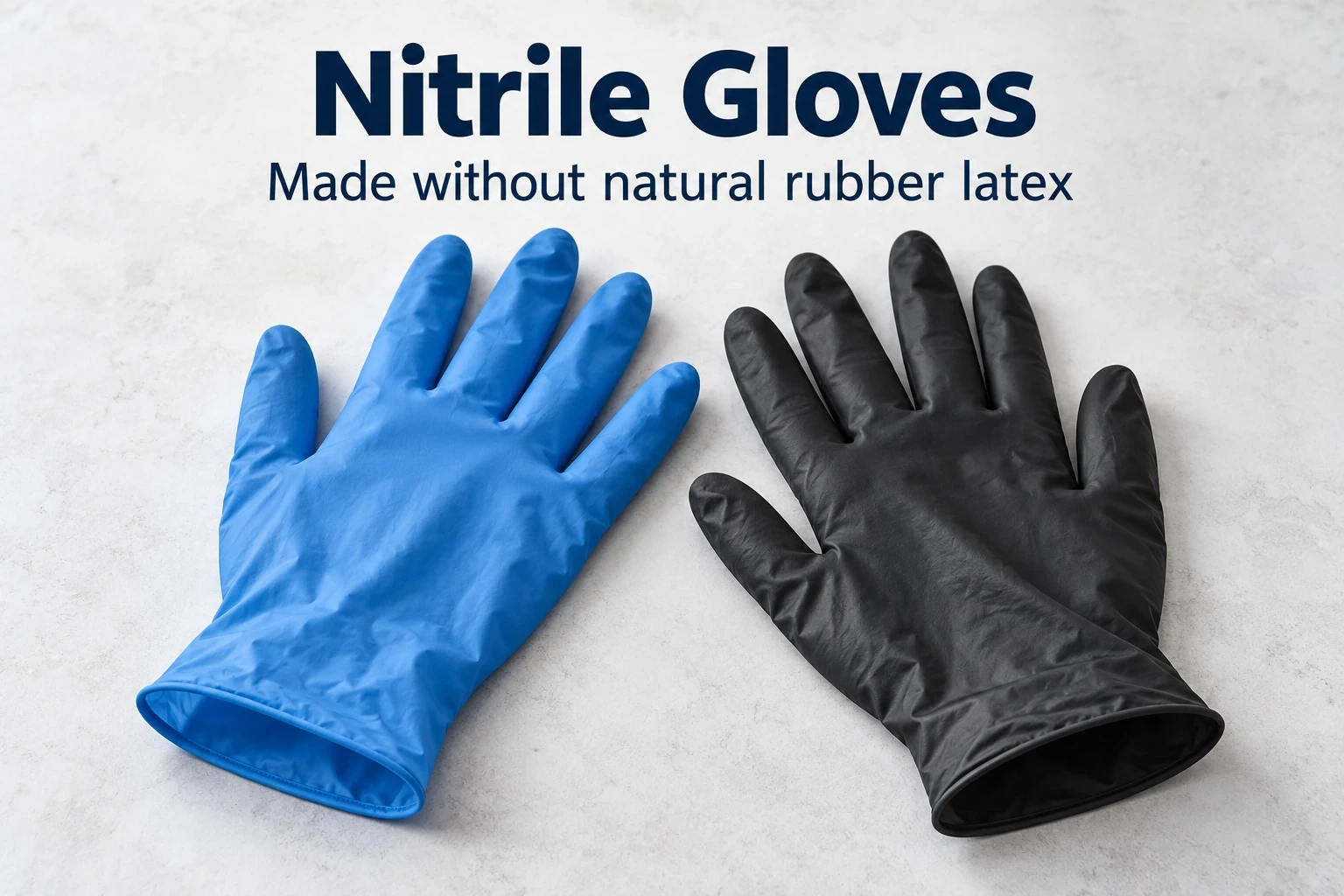
Nitrile vs. Natural Rubber Latex
Latex gloves are made with natural rubber latex — a material derived from the Hevea brasiliensis tree. Nitrile gloves are made from a synthetic rubber compound called acrylonitrile butadiene rubber. The two materials are different in origin, composition, and performance characteristics.
Nitrile is generally considered more resistant to punctures and certain chemicals than natural rubber latex, and it does not contain the proteins associated with natural-rubber-latex allergy. Latex gloves are valued for their close fit, elasticity, and tactile sensitivity in precision tasks.
Material choice should also account for the task, required standards, thickness, fit, and manufacturer documentation. For a full material comparison, see the Nitrile vs. Vinyl vs. Latex Gloves guide.
Does Latex-Free Mean Allergy-Free?
No. Avoiding natural rubber latex does not guarantee that no skin reaction will occur. Skin reactions associated with glove use can have several possible causes:
- Natural-rubber-latex allergy — a reaction associated with proteins found in natural rubber latex. Nitrile gloves do not contain these proteins.
- Irritant contact dermatitis — skin irritation that can be associated with moisture, repeated handwashing, friction, or prolonged glove use. This is not an allergic reaction and can occur with any glove material.
- Allergic contact dermatitis — a delayed skin reaction that may be associated with certain chemicals used in glove manufacturing, including accelerators. This can occur with nitrile gloves as well as other materials.
If a concerning skin reaction develops, stop using the suspected product and consult an appropriate healthcare professional or workplace safety contact. This guide does not provide medical advice.
Can Someone React to Nitrile Gloves?
Yes. Reactions can occur even when a glove is not made with natural rubber latex. Possible contributing factors may include:
- Chemical accelerators used in the manufacturing process
- Dyes or colorants
- Residual manufacturing chemicals
- Perspiration and moisture buildup during extended wear
- Friction from repeated donning and removal
- Frequent handwashing before or after glove use
- Prolonged glove use beyond the intended wear duration
- Other substances present in the work environment
Some manufacturers produce gloves described as accelerator-free, which means they are made without certain sulfur-based or other chemical accelerators commonly used in glove production. If accelerator-free documentation is important for your application, verify that claim directly with the manufacturer or product data sheet for the specific glove — do not assume it from the material type alone.
A skin reaction can have several possible causes. One reaction does not confirm the cause, and no glove material is guaranteed to be free of reactions for every user.
Powder-Free Does Not Mean Latex-Free
These are two separate product specifications:
- Powder-free describes the absence of glove powder — typically cornstarch — used to ease donning.
- Latex-free (or "not made with natural rubber latex") describes the glove material.
A latex glove can be powder-free. A nitrile glove can also be powder-free. The two terms are not interchangeable and describe different product characteristics. For more on powder status, see the Powdered vs. Powder-Free Gloves guide.
What Buyers Should Check
Glove color does not establish whether a glove contains natural rubber latex. Blue, black, orange, or any other color does not confirm the material. Always verify the product documentation.
- Read the box and product specifications.
- Look for precise material wording — "not made with natural rubber latex" is more specific than a general "latex-free" label.
- Confirm whether the glove is made with natural rubber latex.
- Check for a documented accelerator-free claim if that matters for your application — verify it directly with the manufacturer.
- Verify the required exam-grade or industrial-use designation. See Exam Grade vs. Industrial Grade Gloves for guidance.
- Choose the correct size and thickness for the task. See the Disposable Glove Size Guide and Thickness Guide.
- Review workplace allergy and PPE policies before selecting a product for a team.
- Stop using a glove if a concerning reaction develops and consult an appropriate professional.
Choosing Nitrile Gloves for Business Use
When purchasing nitrile gloves for a team or recurring order, compare:
- Documented glove material and any relevant claims on the product labeling
- Intended application and task demands
- Active stock versus special-order status
- Exam-grade or industrial-use designation
- Size range available for your workforce
- Thickness and construction
- Texture and grip for the specific task
- Cuff length
- Box and case quantity
- Current availability for repeat orders
Businesses purchasing for teams should account for employee sizing and any documented sensitivity requirements rather than assuming one product works for everyone. Browse black nitrile, blue nitrile, and orange nitrile options in the AEKONAMI shop, or contact us through the wholesale page to discuss options for your application.
Related guides
Frequently Asked Questions
Are all nitrile gloves latex-free?
Nitrile is a synthetic rubber material and is not made from natural rubber latex. Nitrile gloves are generally used as an alternative to natural-rubber-latex gloves. However, buyers should verify the exact product labeling and manufacturer documentation for the specific glove they are purchasing rather than relying on the material name or category description alone.
Do nitrile gloves contain natural rubber latex?
Nitrile gloves are made from a synthetic rubber compound, not from natural rubber latex. They are generally used in settings where natural-rubber-latex gloves are not appropriate. Verify the product packaging and specifications for the exact glove you are considering.
Can nitrile gloves cause an allergic reaction?
Yes. A skin reaction can occur even when a glove is not made with natural rubber latex. Possible contributing factors include chemical accelerators used in manufacturing, dyes, residual manufacturing chemicals, perspiration, friction, frequent handwashing, prolonged glove use, or other substances in the work environment. If a concerning reaction develops, stop using the suspected product and consult an appropriate healthcare professional or workplace safety contact.
Does powder-free mean latex-free?
No. Powder status and glove material are separate specifications. A powder-free glove may or may not be made with natural rubber latex. A latex glove can be powder-free. A nitrile glove can also be powder-free. The two terms describe different product characteristics and are not interchangeable.
What should I check when buying latex-free disposable gloves?
Read the product packaging and specifications. Look for precise material wording — "not made with natural rubber latex" is more specific than a general "latex-free" label. Check whether the glove has a documented accelerator-free claim if that matters for your application. Verify the exam-grade or industrial-use designation, size range, thickness, and current availability. Review your workplace allergy and PPE policies before selecting a product for a team.