
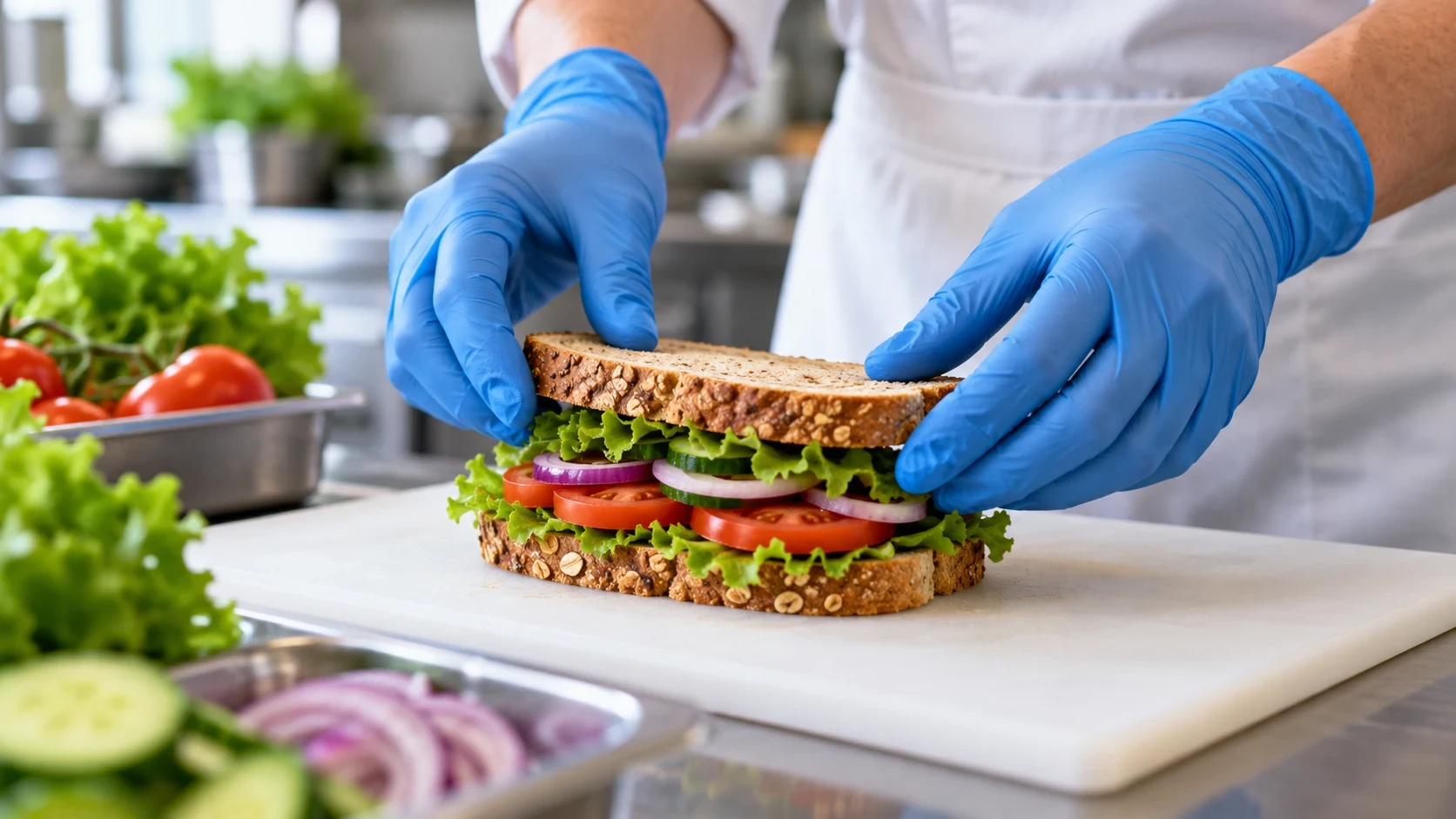
Restaurant owners, commercial kitchen operators, caterers and food-processing businesses typically need more than one glove type to cover different tasks. A loose-fitting polyethylene glove that works well at a deli counter is not the right choice for extended raw-meat preparation. A close-fitting nitrile glove suited for detailed prep work may be more than necessary for a quick ready-to-serve task. Before ordering by the case, confirm that the specific product you are considering is documented for its intended food-contact use. The glove's packaging, product specifications and manufacturer documentation are the authoritative sources — not the material or color alone.
Quick Answer: Which Food-Handling Gloves Should You Choose?
Start with the task. Food-contact-documented nitrile gloves are worth considering for preparation that needs a close fit and precise hand movements. Vinyl can be practical for short tasks with frequent changes. Polyethylene can suit quick serving tasks where easy removal matters more than a snug fit. Check the specific glove's food-contact documentation before buying; material, color and thickness alone do not establish suitability.
Quick Comparison: Nitrile, Vinyl and Polyethylene
| Material | Best suited for | Fit and dexterity | Typical use pattern | Key consideration |
|---|---|---|---|---|
| Nitrile | Extended prep, meat handling, catering, cleaning tasks | Close-fitting; good tactile feedback | Longer-duration tasks; change between incompatible tasks | Verify product is documented for food-contact use |
| Vinyl | Shorter food-service tasks, general food handling | Moderate fit; less form-fitting than nitrile | Shorter tasks; frequent changes | Verify product is documented for food-contact use |
| Polyethylene | Quick, simple food-service tasks; deli and counter work | Loose-fitting; easy on/off | Very short tasks; high-frequency changes | Not intended for tasks requiring close fit or durability |
| TPE | Food service, janitorial, general commercial use | More flexible than standard polyethylene | Frequent changes; light-duty tasks | Verify product is documented for food-contact use |
This table reflects general material characteristics. Actual performance varies by product. Always verify the specific glove's labeling and documentation for its intended food-contact use before ordering.
Nitrile Gloves for Food Preparation
Nitrile gloves are a common choice for food-preparation tasks that require closer fit and greater durability than loose-fitting food-service gloves. They are latex-free, which makes them a practical option in kitchens where latex sensitivity is a concern. Powder-free nitrile gloves are generally preferred in food-service environments to avoid residue transfer.
Tasks where nitrile gloves may be appropriate include extended food preparation, raw meat handling, catering and BBQ service, and cleaning tasks between food-service work. That said, gloves should be changed between incompatible tasks — wearing the same pair from raw meat preparation to ready-to-eat food handling is not appropriate regardless of glove material.
Not every nitrile glove is automatically documented for food contact. Verify the product labeling and manufacturer specifications for the specific glove you are considering. AEKONAMI carries blue nitrile gloves and black nitrile gloves in multiple thicknesses — review the individual product pages for specifications.
Vinyl Gloves for Food Handling
Vinyl gloves are widely used in food-service settings for shorter, lower-intensity tasks where gloves are changed frequently. They are latex-free and generally less expensive per glove than nitrile, which makes them practical for high-volume operations that go through large quantities.
Vinyl gloves offer a moderate fit — closer than polyethylene but generally less form-fitting than nitrile. For tasks requiring extended wear or greater durability, a nitrile glove may be a better fit. As with any glove, confirm that the specific product is documented for the intended food-contact use. AEKONAMI's vinyl gloves are described for food service and food handling use — see the category page for individual product specifications.
Polyethylene Gloves for Food Service
Polyethylene (poly) gloves are loose-fitting, lightweight and easy to put on and remove quickly. They are commonly used for short, simple food-service tasks such as handling ready-to-serve items, deli counter work and other applications where gloves are changed very frequently.
Because they are loose-fitting, poly gloves are not intended for tasks that require close fit, dexterity or durability. They are not a substitute for a more task-appropriate glove for extended food preparation or raw-meat handling. AEKONAMI's polyethylene gloves are described for food handling and deli use — see the product page for specifications.
How to Choose for Your Operation
Use this checklist as a starting point when selecting food-handling gloves for your business:
- Confirm the glove is documented for the specific food-contact task — check the product labeling and manufacturer specifications.
- Select the material based on the actual job: fit, dexterity, duration and change frequency.
- Choose the correct size — an ill-fitting glove is more likely to tear or slip.
- Change gloves between tasks, especially when moving between raw and ready-to-eat foods.
- Replace torn, contaminated or damaged gloves immediately.
- Never treat gloves as a substitute for proper handwashing.
- If latex sensitivity is a concern in your workplace, confirm the glove material is latex-free — powder-free does not mean latex-free.
- Review your local health-department requirements and workplace food-safety policies, which may specify glove types, change frequency or other requirements.
Practical Recommendations by Task
These are selection considerations, not universal approvals. Verify the specific product's documentation for your intended use.
| Task | Glove to consider | Why |
|---|---|---|
| Quick sandwich or bakery handling | Polyethylene or vinyl | Short duration; frequent changes; easy on/off |
| Extended food preparation | Nitrile | Closer fit; greater durability for longer tasks |
| Raw meat preparation | Nitrile | Durability and fit; change before handling ready-to-eat foods |
| Catering and BBQ service | Nitrile | Durability for extended outdoor or high-volume service |
| Cleaning and sanitation | Depends on the cleaning product | Check the cleaning product's safety data sheet and the glove manufacturer's compatibility information. Food-handling suitability does not establish chemical protection. Change before returning to food-handling tasks. |
| High-volume glove-change stations | Vinyl or polyethylene | Cost-effective for very frequent changes at service stations |
Compare Cost per Glove Before Buying by the Case
Compare the total purchase cost with the number of individual gloves supplied. Case counts vary, so the lowest case price does not always mean the lowest cost per glove.
Cost per glove = total purchase cost ÷ individual gloves supplied.
For example, a hypothetical $60 case containing 1,000 gloves costs $0.06 per glove. A hypothetical $50 case containing 500 gloves costs $0.10 per glove. These examples explain the calculation; they are not AEKONAMI product prices.
Also consider fit, ease of changing gloves and whether the glove suits the task. A less expensive glove provides little value if workers cannot use it comfortably or appropriately.
Buying Food-Handling Gloves by the Case
Food-service businesses typically go through gloves quickly. Buying by the case reduces per-unit cost and keeps supply on hand. Before placing a bulk order, work through a few practical steps:
- Estimate usage across shifts and stations to determine how many cases you need per week or month.
- Keep the most commonly used sizes in stock — running out of the right size mid-service is a real operational problem.
- Check the case count and box count on the product page — units per box and boxes per case vary by product.
- Review storage conditions and shelf life before ordering large quantities.
- Confirm food-contact suitability from the product documentation before ordering, not after.
For higher-volume or recurring orders, AEKONAMI offers wholesale and volume pricing. Restaurants and food-service operators can also visit the restaurants and food service page for additional PPE guidance specific to that industry.
Frequently Asked Questions
What are the best disposable gloves for food handling?
There is no single best glove for every food-handling task. The right choice depends on the specific job, how long the gloves will be worn, how often they will be changed, and the requirements of your local health department or workplace. Nitrile gloves may be appropriate for tasks requiring closer fit and durability. Vinyl or polyethylene gloves may be appropriate for shorter, lower-intensity tasks with frequent changes. Verify that the specific product you select is documented for the intended food-contact use before ordering.
Can nitrile gloves be used for food preparation?
Nitrile gloves may be suitable for food preparation when the specific product is documented for that intended use. Not every nitrile glove is automatically appropriate for food contact — verify the product labeling and manufacturer specifications before use. Powder-free nitrile gloves are generally preferred in food-service environments to avoid residue transfer.
Are black nitrile gloves safe for food handling?
Glove color does not determine food-contact suitability. A black nitrile glove is not automatically safe or unsafe for food handling based on its color. The specific product's labeling and manufacturer documentation must support its intended food-contact use. Review the product specifications for the glove you are considering before using it in a food-handling application.
Are vinyl or polyethylene gloves better for frequent glove changes?
Both vinyl and polyethylene gloves are commonly used in food-service settings where gloves are changed frequently. Polyethylene gloves are typically loose-fitting and easy to put on and remove quickly, making them practical for high-volume, short-duration tasks. Vinyl gloves generally offer a closer fit than polyethylene. The better choice depends on the specific task and how often gloves need to be changed. Confirm that the product you select is documented for the intended food-contact use.
How often should food-handling gloves be changed?
The FDA Food Code model calls for single-use gloves to be used for one task and discarded when damaged, soiled or when interruptions occur. Change gloves when switching from raw food to ready-to-eat food, and follow applicable local rules and workplace procedures. The FDA Food Code is a model code; confirm which rules apply in your jurisdiction. Gloves do not replace handwashing.
Are black gloves better than blue gloves for food preparation?
Color alone does not establish food-contact suitability or performance. Choose based on the specific glove documentation, fit and task requirements, then consider your workplace color-coding policy.
Does thicker mean better for food-handling gloves?
Thickness is one buying consideration, not a food-safety rating. Select a documented food-contact glove that provides an appropriate balance of fit, dexterity and durability for the work. Do not select by thickness alone.
Are disposable food-handling gloves heat-resistant?
Do not assume disposable food-handling gloves protect against heat. Use task-appropriate heat protection when handling hot cookware or equipment, following the relevant product instructions.
Primary Source
- FDA Food Code, Section 3-304.15 — Model food code for single-use glove use and change requirements. The FDA Food Code is a model; confirm which rules apply in your jurisdiction.