

Short Answer
For routine nonsurgical patient care, CDC recommends nonsterile examination gloves; for oral surgical procedures, CDC recommends sterile surgical gloves. Manual cleaning of contaminated instruments calls for puncture-resistant, heavy-duty utility gloves. Choose powder-free medical gloves and plan sizes and quantities around your team's fit needs and actual usage.
Are you ordering for patient care or cleaning?
The task determines the glove. For patient care — examinations, nonsurgical procedures, and contact with mucous membranes — you need nonsterile examination gloves regulated by the FDA as medical devices. For oral surgical procedures (those involving incision, excision, or reflection of tissue that exposes normally sterile areas of the oral cavity), CDC recommends sterile surgical gloves, which meet a separate FDA standard for sterility assurance.
Instrument reprocessing is a different task. CDC recommends puncture-resistant, heavy-duty utility gloves when manually cleaning contaminated instruments — examination gloves are not designed for that level of mechanical protection. Utility gloves are also appropriate for housekeeping and handling contaminated sharps or chemicals. Do not substitute examination gloves for utility gloves in reprocessing tasks.
Surface disinfection involves chemical exposure. Whether a specific examination glove is suitable for a given disinfectant depends on the glove, the substance, and the exposure conditions — check the glove manufacturer's compatibility data and the chemical's Safety Data Sheet rather than assuming suitability by material alone.
See also: Exam Grade vs. Industrial Gloves: What's the Difference? · Are Nitrile Gloves Chemical Resistant?
Will the gloves fit everyone on your team?
Dental work involves fine motor tasks — probing, scaling, restoration work, instrument handling — where fit matters. A glove that is too loose reduces dexterity and control; one that is too tight causes hand fatigue during longer procedures. Have staff try on gloves from the available sizes before placing a bulk order.
Finger micro-textured surfaces are common in examination gloves used in clinical settings and can improve grip on instruments and small components. Evaluate texture alongside fit and the specific tasks the gloves will be used for.
See also: Disposable Glove Texture Guide · Disposable Glove Size Guide
How do thickness and construction affect your choice?
Glove thickness is measured in mils (thousandths of an inch) and is typically reported at the fingertip, palm, and cuff — values that differ across the same glove. Thickness is one factor among several; construction, formulation, and fit all affect how a glove performs in practice. Review the product's specifications and manufacturer documentation rather than relying on thickness alone.
See also: Disposable Glove Thickness Guide: What Does Mil Mean?
Blue Nitrile Examination Gloves Popular with Dental-Office Customers
Popular choices among AEKONAMI's dental-office customers include IF35, IF40, and IF52 blue nitrile gloves. Review each product's specifications and manufacturer documentation to confirm whether it meets your practice's requirements.
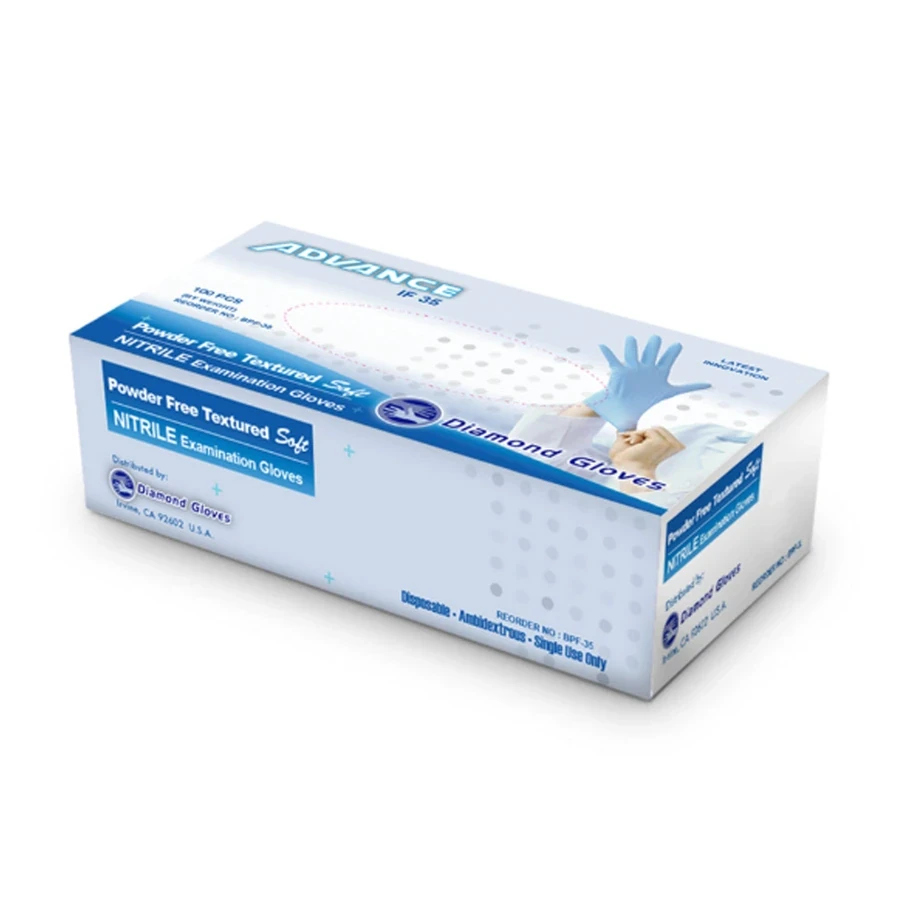
3.5–4.0 mil Blue Nitrile Examination Gloves — IF35
- Thickness:
- 3.5–4.0 mil
- Classification:
- Examination
- Sizes:
- XS, S, M, L, XL
- Packaging:
- 100 gloves/box · 10 boxes/case · 1,000 gloves/case
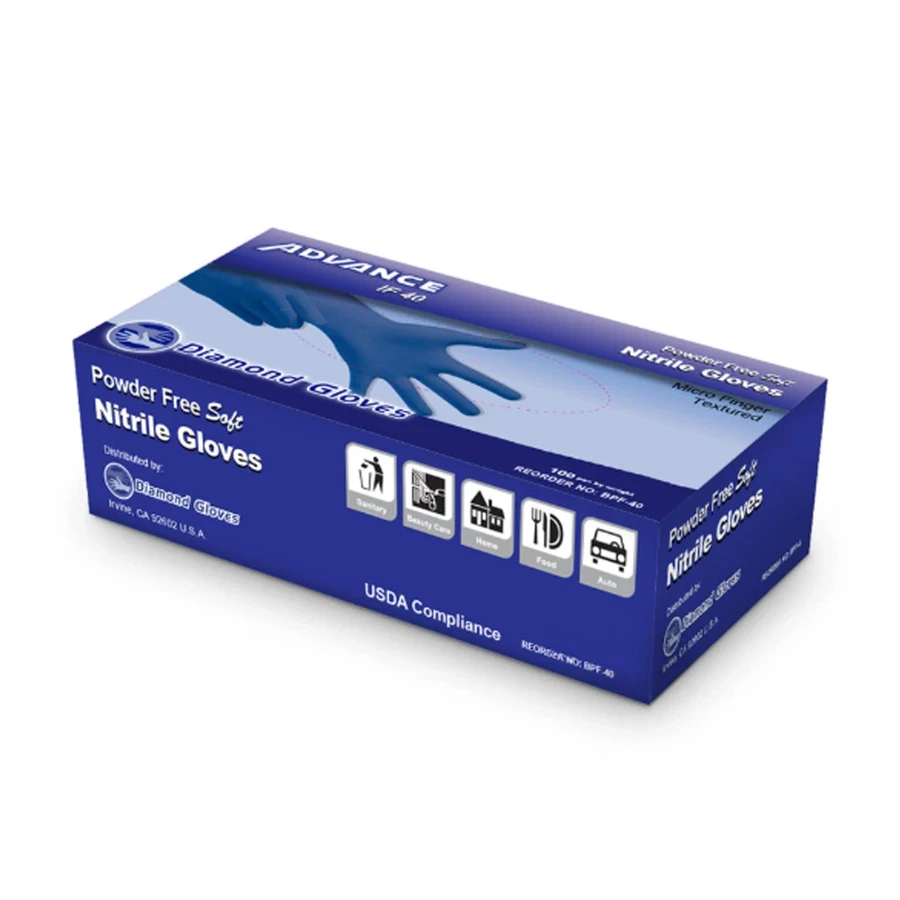
4.0–4.5 mil Blue Nitrile Examination Gloves — IF40
- Thickness:
- 4.0–4.5 mil
- Classification:
- Exam, Multi-purpose
- Sizes:
- XS, S, M, L, XL, XXL
- Packaging:
- 100 gloves/box · 10 boxes/case · 1,000 gloves/case
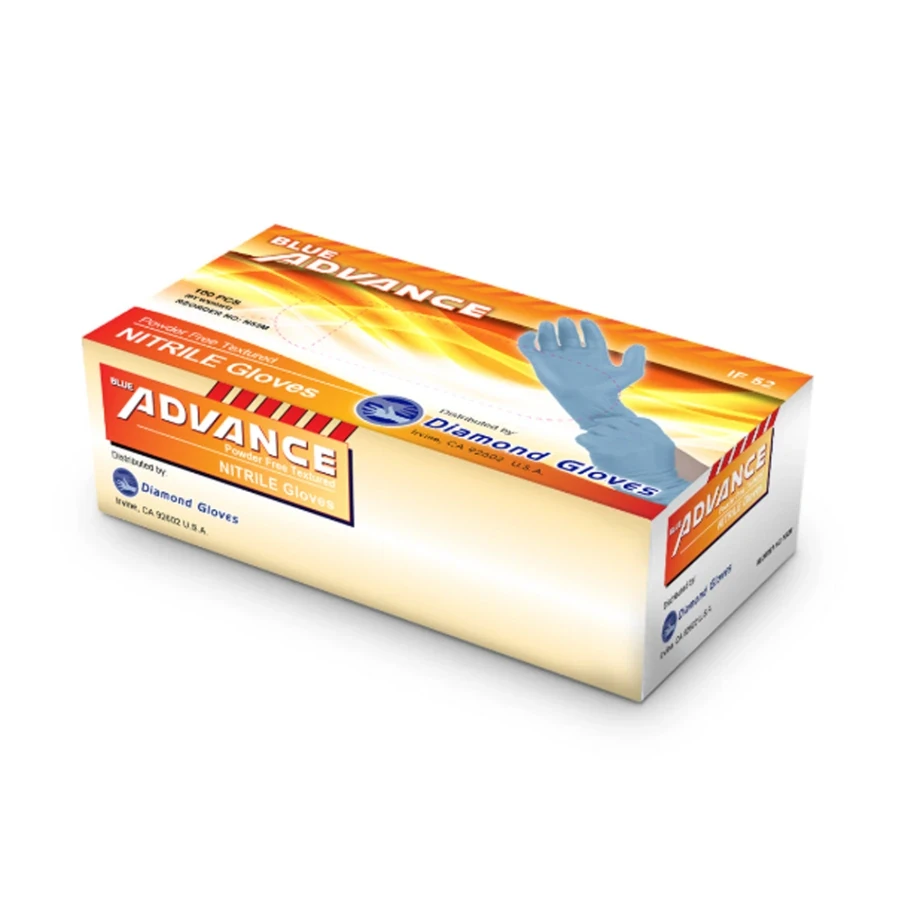
5.0–6.0 mil Blue Nitrile Examination Gloves — IF52
- Thickness:
- 5.0–6.0 mil
- Classification:
- Examination
- Sizes:
- XS, S, M, L, XL, XXL
- Packaging:
- 100 gloves/box · 10 boxes/case · 1,000 gloves/case
See full catalog: Disposable Gloves for Dental Offices
What if someone reports a latex sensitivity?
Natural-rubber latex sensitivity in dental health care personnel and patients is a documented concern. Nitrile gloves are made without natural-rubber latex, which is a meaningful distinction when latex sensitivity is a factor.
Being made without natural-rubber latex does not rule out other glove-related skin reactions. Some additives used in both latex and nitrile gloves during manufacturing can cause allergic contact dermatitis in sensitized individuals — this has been documented in peer-reviewed research (Depree et al., Contact Dermatitis, 2005; PMID 16033405). Practices should have a protocol for screening and responding to reported sensitivities in both staff and patients. Consult a qualified health professional when evaluating specific cases.
See also: Are Nitrile Gloves Latex-Free? What Buyers Should Know
Glove changes, hand hygiene, and single-use rules
CDC recommends a new pair of gloves for each patient. If a glove is torn, cut, or punctured, change it as soon as possible. Disposable gloves should not be washed before use and should not be reused.
Glove use does not replace hand hygiene. CDC recommends performing hand hygiene immediately before donning gloves and again immediately after removing them. Hands should be dry before donning — bacteria can multiply rapidly in moist environments underneath gloves. Alcohol-based hand rubs are effective when hands are not visibly soiled; soap and water when they are.
How many boxes and sizes should you order?
Base your size mix on your team's actual fit requirements and usage. Ordering a size mix that does not reflect actual needs can leave you short on some sizes and overstocked on others. Actual usage data from previous orders is a more reliable planning input than assumed equal demand across sizes.
IF35, IF40, and IF52 are sold by the case: 1,000 gloves per case, packaged as 100 gloves per box across 10 boxes. Factor in replenishment lead time when planning stock levels, particularly for sizes that move faster in your practice. Volume pricing is available for qualifying orders — contact AEKONAMI for details.
Before you place your order
- Confirm the glove type required for each task — examination, surgical, or utility.
- Check staff sizes and preferences; have team members try on gloves before committing to a bulk order.
- Review the selected product's documentation — classification, intended use, and manufacturer specs.
- Confirm gloves per box and boxes per case for each product you are ordering.
- Plan quantities using actual usage data and your practice's replenishment lead time.
Frequently Asked Questions
Do dental offices need examination gloves or surgical gloves?
It depends on the procedure. CDC recommends nonsterile examination gloves for routine patient care and nonsurgical procedures. For oral surgical procedures — those involving incision, excision, or reflection of tissue that exposes normally sterile areas of the oral cavity — CDC recommends sterile surgical gloves. Confirm which classification your procedures require before ordering.
Are powder-free gloves required in dental settings?
The FDA's December 2016 final rule (effective January 18, 2017) banned powdered surgeon's gloves, powdered patient examination gloves, and absorbable powder for lubricating surgeon's gloves from the U.S. market due to documented health risks (FDA, Medical Device Bans). Powder-free is the standard for clinical glove purchasing across all materials — nitrile, latex, and vinyl.
What should a dental office do if a staff member or patient reports a latex sensitivity?
Nitrile gloves are made without natural-rubber latex, which is relevant when latex sensitivity is a factor. However, some additives used in nitrile gloves during manufacturing can also cause skin reactions in sensitized individuals. Practices should have a protocol for screening and responding to reported sensitivities. Consult a qualified health professional when evaluating specific cases.
Can the same gloves be used for patient care and instrument cleaning?
No. CDC recommends puncture-resistant, heavy-duty utility gloves for manually cleaning contaminated instruments — not disposable patient examination gloves. Examination gloves are not designed for the mechanical demands of instrument scrubbing. Use the appropriate glove type for each task.
How do I determine the right glove size mix for my dental practice?
Have staff try on gloves from the available sizes before placing a bulk order. A properly fitted glove should allow full range of motion without excess material at the fingertips or tightness across the palm. Use actual usage data from previous orders as a planning input for how many boxes of each size to stock.
Sources
- CDC — Best Practices for Personal Protective Equipment (Dental Settings)
- CDC — Standard Precautions (Dental Settings)
- CDC — Best Practices for Sterilization in Dental Settings
- Depree GJ, Bledsoe TA, Siegel PD. Survey of sulfur-containing rubber accelerator levels in latex and nitrile exam gloves. Contact Dermatitis. 2005;53(2):107–13. PMID 16033405.
- FDA — Medical Device Bans (powdered gloves ban, December 2016 final rule)